
M.G. Insight

Madison Global Insight delivers research‑driven perspectives on global markets, investment strategy, and digital transformation. Our experts provide forward‑looking analysis on financial innovation, AI adoption, and strategic advisory to help institutions navigate complexity with confidence.

Featured Article

In-depth analysis and strategic perspectives

50 SHADES OF BLACK SWAN: THE GEOPOLITICAL COMMODITY REGIME — GOLD, SILVER, AND CRUDE OIL UNDER US-IRAN WAR CONDITIONS
Market Analysis

50 SHADES OF BLACK SWAN: THE GEOPOLITICAL COMMODITY REGIME — GOLD, SILVER, AND CRUDE OIL UNDER US-IRAN WAR CONDITIONS

The US-Iran conflict and Strait of Hormuz blockade—disrupting 20% of global oil supply—have triggered a permanent regime change in commodity markets characterized by supply weaponization, monetary fragmentation, and inelastic industrial demand. Crude Oil: Prices will spike to $150/bbl in April–May 2026 before correcting to $60–70 as strategic reserves and demand destruction intervene. By 2028, structural deficits from chronic underinvestment drive Brent to $80, with an embedded $18/bbl permanent geopolitical premium. Gold: Reaches $5,050 in H1 2026 before consolidating, then advances to $4,700 by 2028 (UBS targets $6,200+ long-term). Central bank diversification at 55 tonnes/month (vs. 17 pre-2022) and Fed constraints stemming from $36 trillion in U.S. debt provide durable structural support. Silver: Posts a sixth consecutive supply deficit of 67 million ounces, with investment demand rising 20%. Prices advance from $119–129 in 2026 to $179–185 by late 2028, as AI infrastructure, space solar, and EV demand overwhelm thrifting—compressing the gold-silver ratio to 30–35. Investors should accumulate through the 2026 correction to capture multi-year structural appreciation across all three commodity categories.

Dr. Meiji Fong
Mar 9, 2026
15 min read
OPERATION EPIC FURY: THE WAR THAT CONQUERED AMERICA: How Israel Exploited Trump's Addiction to Empire, Murdered the Petrodollar, and Unleashed the Black Swan That Will Destroy the U.S. Economy
Market Analysis

OPERATION EPIC FURY: THE WAR THAT CONQUERED AMERICA: How Israel Exploited Trump's Addiction to Empire, Murdered the Petrodollar, and Unleashed the Black Swan That Will Destroy the U.S. Economy

OPERATION EPIC FURY: THE WAR THAT CONQUERED AMERICA: How Israel Exploited Trump's Addiction to Empire, Murdered the Petrodollar, and Unleashed the Black Swan That Will Destroy the U.S. Economy The United States won every military objective in 72 hours and lost the war anyway. Operation Epic Fury eliminated Iran's leadership, but triggered the Mosaic Defense doctrine—thirty-one autonomous provincial commanders who discovered that making the Strait of Hormuz uninsurable was more powerful than any navy. The financial consequences have created clear winners and losers. Brent crude now carries an $18 per barrel permanent risk premium, making energy equities the obvious long position. Exxon Mobil gained 7.8 percent; Occidental rose 12.4 percent. Defense contractors followed: Lockheed Martin added 6.8 percent, Palantir 8.2 percent. Gold broke $3,000, driven by central bank buying and safe-haven demand. Treasury yields rose 11 basis points during a crisis for the first time in history, punishing traditional 60/40 portfolios as both stocks and bonds sold off. LPG prices surged 36 percent, benefiting natural gas producers while threatening plastics manufacturing. The losers were equally clear. Airlines dropped 12 to 15 percent on fuel costs. Delta faces $1.2 billion in annualized increases. Private credit funds experienced redemption surges as investors recognized liquidity mismatch risks in the $1.5 trillion market. Investors should position long energy, defense, and gold while shorting airlines, consumer discretionary, and private credit. The petrodollar recycling mechanism has fractured. The great decoupling has begun.

Dr. Meiji Fong
Mar 6, 2026
13 min readRead More
Geopolitical Commodities Market Flashpoint: U.S.-Iran War Accelerates Risk Scenarios and Commodities Price Hikes – Hedgers Haven – Price Action Report
Market Analysis

Geopolitical Commodities Market Flashpoint: U.S.-Iran War Accelerates Risk Scenarios and Commodities Price Hikes – Hedgers Haven – Price Action Report

In the midst of early March's geopolitical turmoil, the U.S.-Iran war has ignited a commodities flashpoint, with U.S.-Israeli strikes claiming Supreme Leader Ayatollah Ali Khamenei and sparking Iranian missile retaliations on Gulf U.S. bases. This escalation has severely disrupted Strait of Hormuz traffic due to IRGC warnings and voluntary suspensions by major shippers, inflating oil premiums and pushing Brent crude higher. OPEC+'s modest production hike offers limited stabilization amid spare capacity constraints, risking alliance fractures from external pressures. Precious metals surge as safe-havens: Gold climbs amid resistance tests, silver advances with ratio compression signaling potential outperformance, and platinum edges up fueled by deficits and industrial demands like EVs and green hydrogen. Equities face risk-off selloffs, bonds rally on yield drops, forex boosts the USD, and real estate REITs dip under inflation erosion. This report's chronology traces tensions from foundational events to the "Operation Epic Fury" outbreak, dissecting scenarios: contained stabilization, prolonged stagflation, and extreme spikes. Quantitative models and Monte Carlo simulations quantify risks, urging hedges like physical metals and futures. Uncover nuanced implications, edge cases, and cross-asset strategies—dive in for the full horizon of the year's volatile opportunities.

Dr. Meiji Fong
Mar 2, 2026
10 min readRead More
The New USSR: The United States of Statist Reorientation
Market Analysis

The New USSR: The United States of Statist Reorientation

The New USSR: The United States of Statist Reorientation. This is the anatomy of a quiet collapse—a nation not defeated, but disassembling itself, alliance by deliberate alliance, fully conscious and driving off the cliff with the headlights on. Over fourteen months, Washington has systematically dynamited the three pillars of American prosperity. The first pillar—our $36 trillion debt market— has been poisoned as foreign buyers flee and yields spike, making your mortgage, your car loan, and every corporate borrowing more expensive than war. The second pillar—global fiat currency dominance— has been deliberately cracked by sanctions reversals and trade withdrawals that signal to Beijing, Moscow, and Riyadh that the dollar's throne is now a rental property. The third pillar—commodity markets— has been surrendered as adversaries price oil, gas, and grain in yuan and rubles, while American farmers lose their last remaining markets not to competition, but to abandonment. This is not failure of execution; it is failure of conception. A doctrine marketed as restoration has produced, through deliberate strategic choice, the very isolation it claimed to oppose—and the question is no longer whether America will decline, but whether anyone in Washington noticed they are driving the bus off the cliff and calling it renewal.

Dr. Meiji Fong
Feb 12, 2026
14 min readRead More
China's Strategic Macroeconomic Firepower
Market Analysis

China's Strategic Macroeconomic Firepower

Stop waiting for a collapse—Beijing is weaponizing the "Trump Triple Threat" as a catalyst to engineer a ruthless, high-tech comeback that will redefine the global order. This is the definitive, algorithmic blueprint for how China plans to deploy its massive "fiscal firepower" and dominate the next decade; read it now to see the future of power, or get buried in the wreckage of the old world.

Dr. Meiji Fong
Feb 9, 2026
4 min readRead More
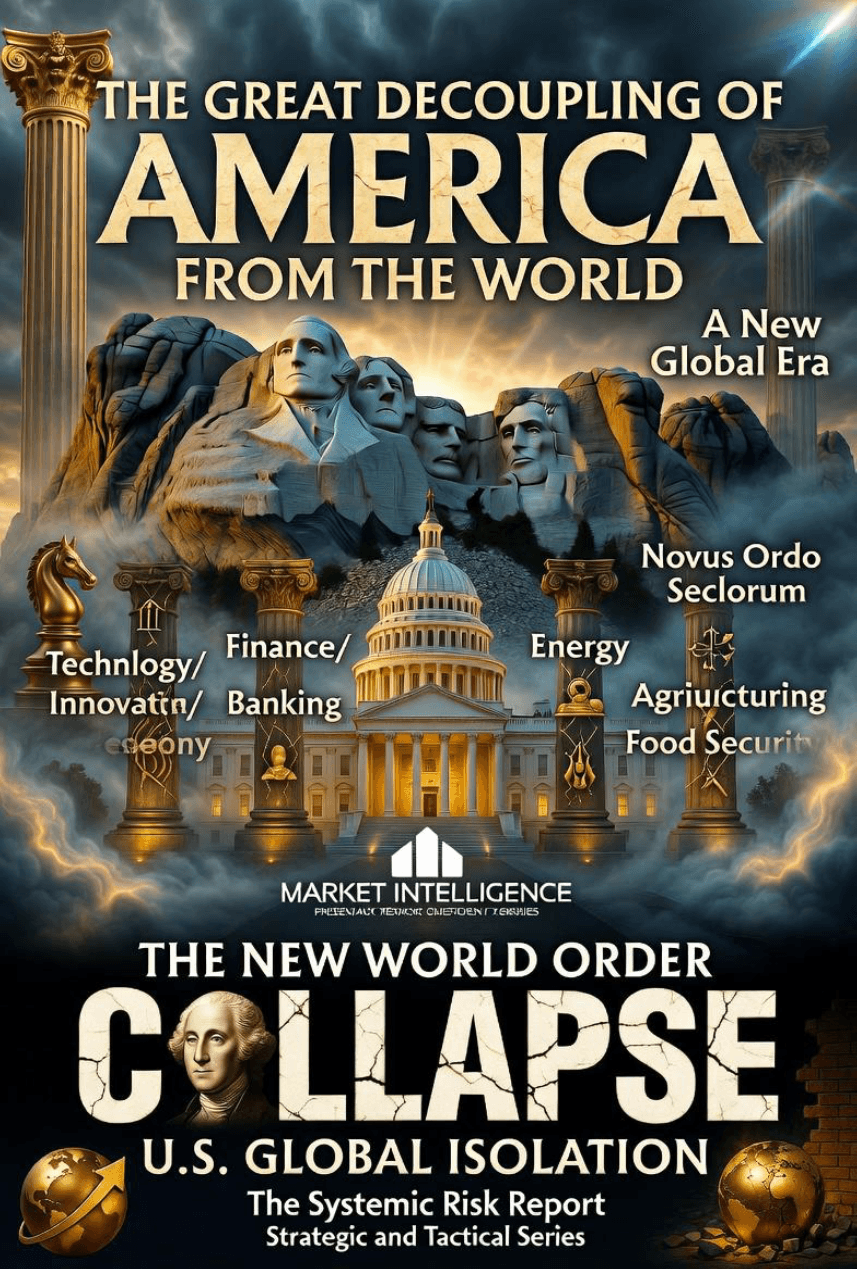
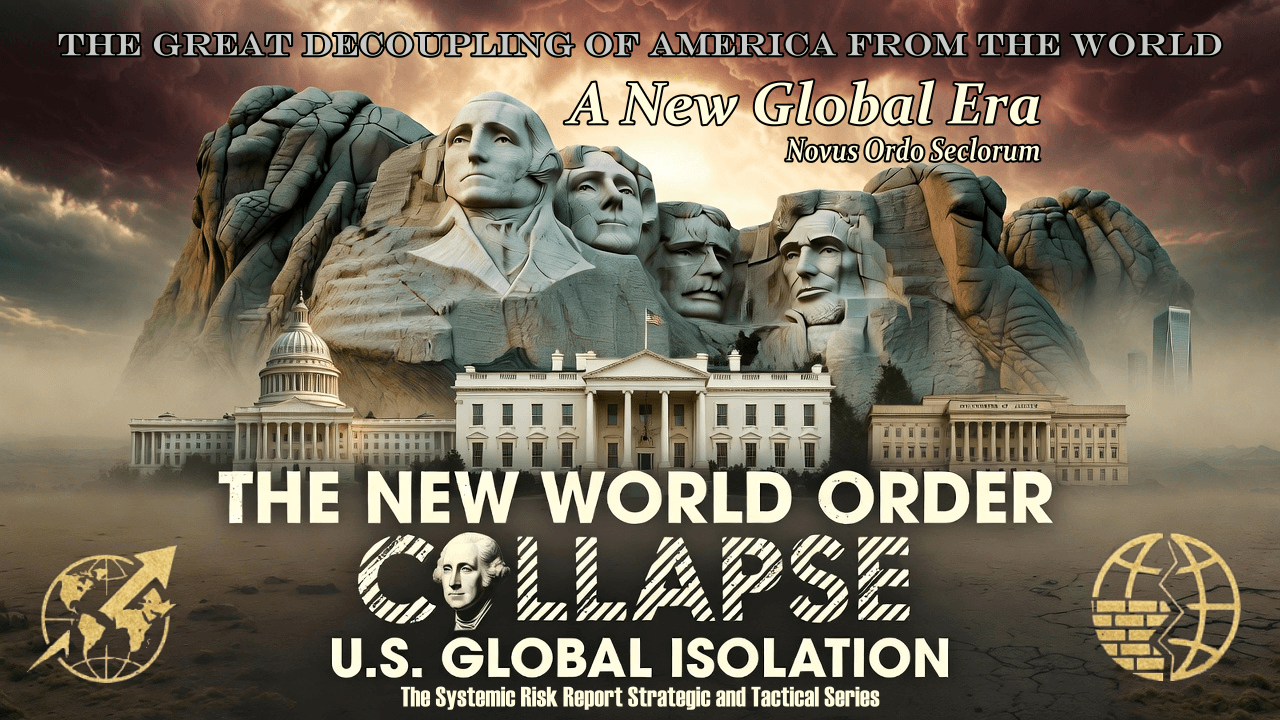
The Great Decoupling of America From the World
Market Analysis

The Great Decoupling of America From the World

The report warns that the U.S. has entered a "high-variance, supply-shock-driven regime" that constrains policy options and amplifies volatility. Without coordinated monetary, fiscal, and diplomatic responses to restore supply resilience and institutional credibility, macro-financial fragilities will deepen, leading to disruptive, economy-wide episodes.

Dr. Meiji Fong
Feb 1, 2026
4 min readRead More
The Future of Banking - Hybrid Trust with Centralized Assurance and Federated Data
Digital Transformation

The Future of Banking - Hybrid Trust with Centralized Assurance and Federated Data

Interview with Banking Transformation Summit 2025 on the Future of Banking.

Connie Leung
Jan 22, 2026
1 min readRead More
Beyond Dashboards: Elevating the Work that Builds Trust
Digital Transformation

Beyond Dashboards: Elevating the Work that Builds Trust

This article explores how digital tools; when designed with intention, can elevate the human side of leadership. Not by replacing it, but by amplifying it. We will look at three key areas: shaping behavior through design, surfacing sentiment through intelligence, and expanding strategic capacity through AI.

Connie Leung
October 29, 2025
6 min readRead More
Transforming Operations From Cost Center to Revenue Engines
Digital Transformation

Transforming Operations From Cost Center to Revenue Engines

Perception shapes reality. Historically, Operations have been seen as a necessary expense, a cost center supporting core revenue-generating activities. However, this perspective is evolving as organizations recognize the strategic values of Operations.

Connie Leung
March 13, 2025
7 min readRead More
US Treasury Clearing Operational Readiness
Banking & Financial Services

US Treasury Clearing Operational Readiness

The upcoming changes in the U.S. Treasury (UST) market, driven by the Securities and Exchange Commission's (SEC) final rule in December 2023 requiring central clearing of UST transactions, present both challenges and opportunities for market participants. This guide serves as a quick reference to key steps for operational readiness.

Connie Leung
February 19, 2025
4 min readRead More
T+1: Buy-side considerations
Banking & Financial Services

T+1: Buy-side considerations

Ready or not, the T+1 settlement cycle will be here! While it may not be imminent, its impact on securities finance and foreign exchange (FX) transactions will be significant in the long run. Let’s delve into some key considerations.

Connie Leung
May 24, 2024
2 min readRead More

Stay Informed

Subscribe to receive our latest insights and research directly to your inbox.